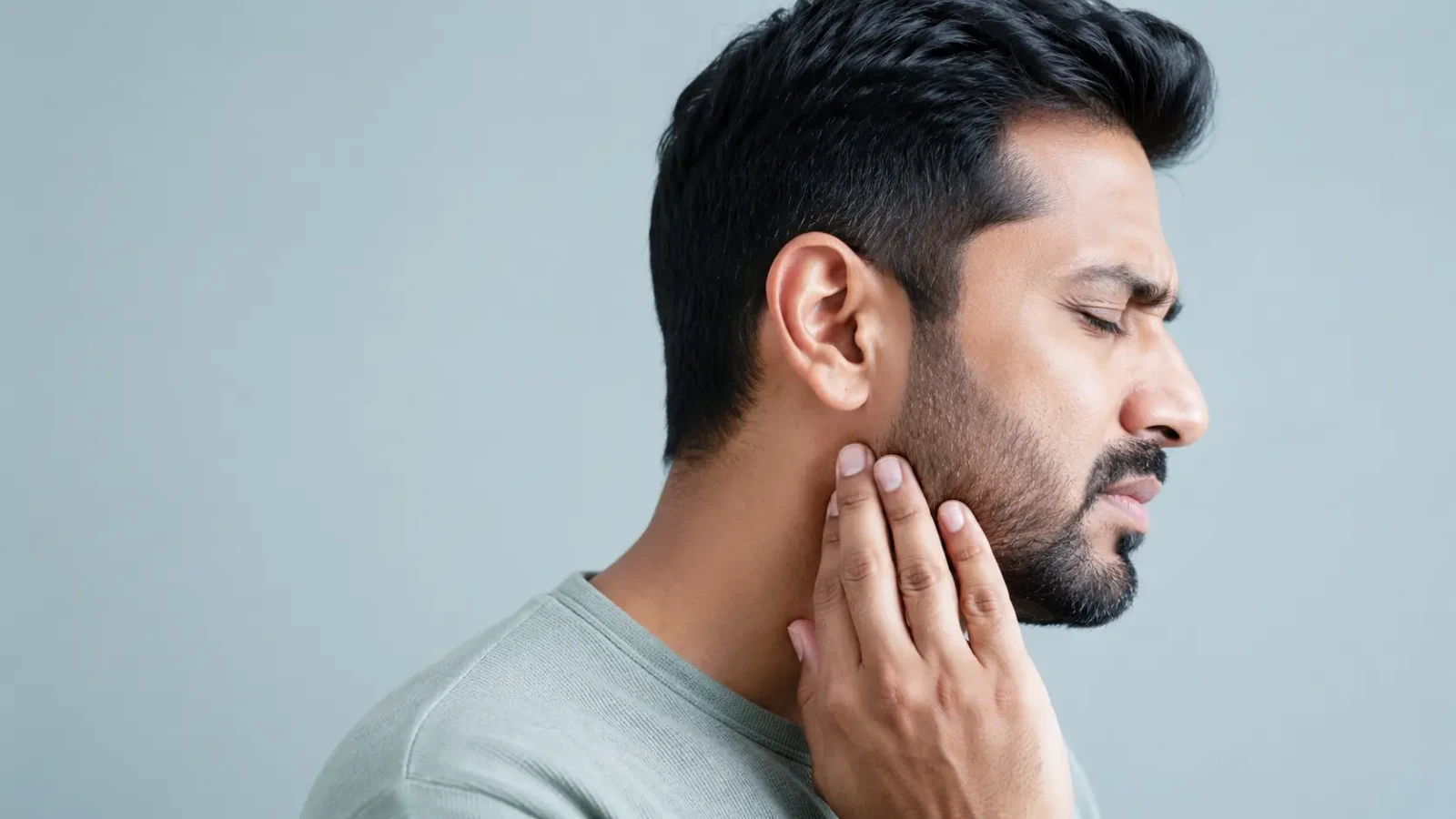
If your jaw clicks, aches, or feels stiff - or you get headaches around the temples - the cause may be your temporomandibular joint (TMJ), the hinge connecting your jaw to your skull. TMJ problems are common, often linked to grinding and stress, and usually manageable with simple measures. Here’s what to know.
Jaw problems and teeth grinding are closely connected. If you clench or grind, our guide to bruxism and night guards is a useful companion to this one.
Symptoms of a TMJ Problem
- Jaw pain or tenderness, especially near the ears
- Clicking, popping, or grating when you open or close
- Stiffness or a jaw that feels like it locks or catches
- Headaches around the temples
- Aching around the face, ears, or neck
- Difficulty or discomfort when chewing
What Causes It
- Teeth grinding and clenching - a very common contributor
- Stress - which increases clenching
- An uneven bite or missing teeth
- Injury to the jaw
- Habits like nail-biting, gum-chewing, or jaw-thrusting
- Occasionally, arthritis affecting the joint
Managing TMJ Pain at Home
- Eat softer foods and cut them small to rest the jaw
- Avoid chewing gum and biting nails or pens
- Apply a warm compress to relax tight jaw muscles
- Practise gentle jaw relaxation - keep teeth slightly apart at rest
- Manage stress, which drives clenching
- Take over-the-counter pain relief as directed if needed
Key fact: A simple habit change helps many people: your teeth should only meet when chewing or swallowing. At rest, lips together but teeth slightly apart takes constant load off the joint and muscles - noticing and correcting daytime clenching alone can bring real relief.
Professional Treatment
When home measures aren’t enough, a dentist can help. A custom night guard or bite splint reduces the effects of grinding and takes pressure off the joint. Correcting an uneven bite, replacing missing teeth, and addressing grinding all help. Most TMJ problems settle with these conservative steps; surgery is rare and reserved for specific joint conditions.
TMJ: Symptom & Action at a Glance
| Symptom | First Steps |
|---|---|
| Clicking, mild ache | Soft diet, jaw rest, warm compress |
| Pain from clenching | Stress management, night guard |
| Morning jaw ache | Assess for grinding; night guard |
| Uneven bite | Bite assessment |
| Locking jaw | See a dentist promptly |
⚠ Important: A jaw that locks open or closed, or severe pain that stops you eating, needs prompt professional care rather than waiting. Most TMJ trouble is manageable, but persistent or worsening symptoms should always be assessed.
Jaw clicking, aching, or stiff?
Book an assessment at The Dentart, Sarjapura, Bengaluru. We’ll check your bite and jaw, identify what’s driving the pain, and fit a night guard or splint if it’ll help.
Frequently Asked Questions
Jaw pain questions our patients in Sarjapura ask most.
Is jaw clicking something to worry about?
Painless clicking on its own is often harmless. Clicking with pain, locking, or stiffness is worth having assessed.
Can grinding cause jaw pain?
Yes - grinding and clenching are among the most common causes of TMJ pain, which is why a night guard often helps.
Will TMJ pain go away on its own?
Mild cases often settle with jaw rest, a soft diet, and stress management. Persistent pain benefits from professional treatment.
Do I need surgery for TMJ?
Very rarely. The large majority of cases improve with conservative measures like splints, bite adjustment, and habit changes.
Can stress really affect my jaw?
Yes - stress increases clenching and muscle tension, which loads the joint. Managing it is an important part of treatment.
Final Takeaway
TMJ trouble - clicking, aching, stiffness, and temple headaches - is common and usually tied to grinding, clenching, and stress. Most cases improve with jaw rest, a softer diet, stress management, and a night guard where grinding is involved. Surgery is rarely needed.
Book an assessment at The Dentart, Sarjapura, and let’s ease your jaw pain.
You May Also Find Helpful
Book a Consultation
It’s easy and free!