
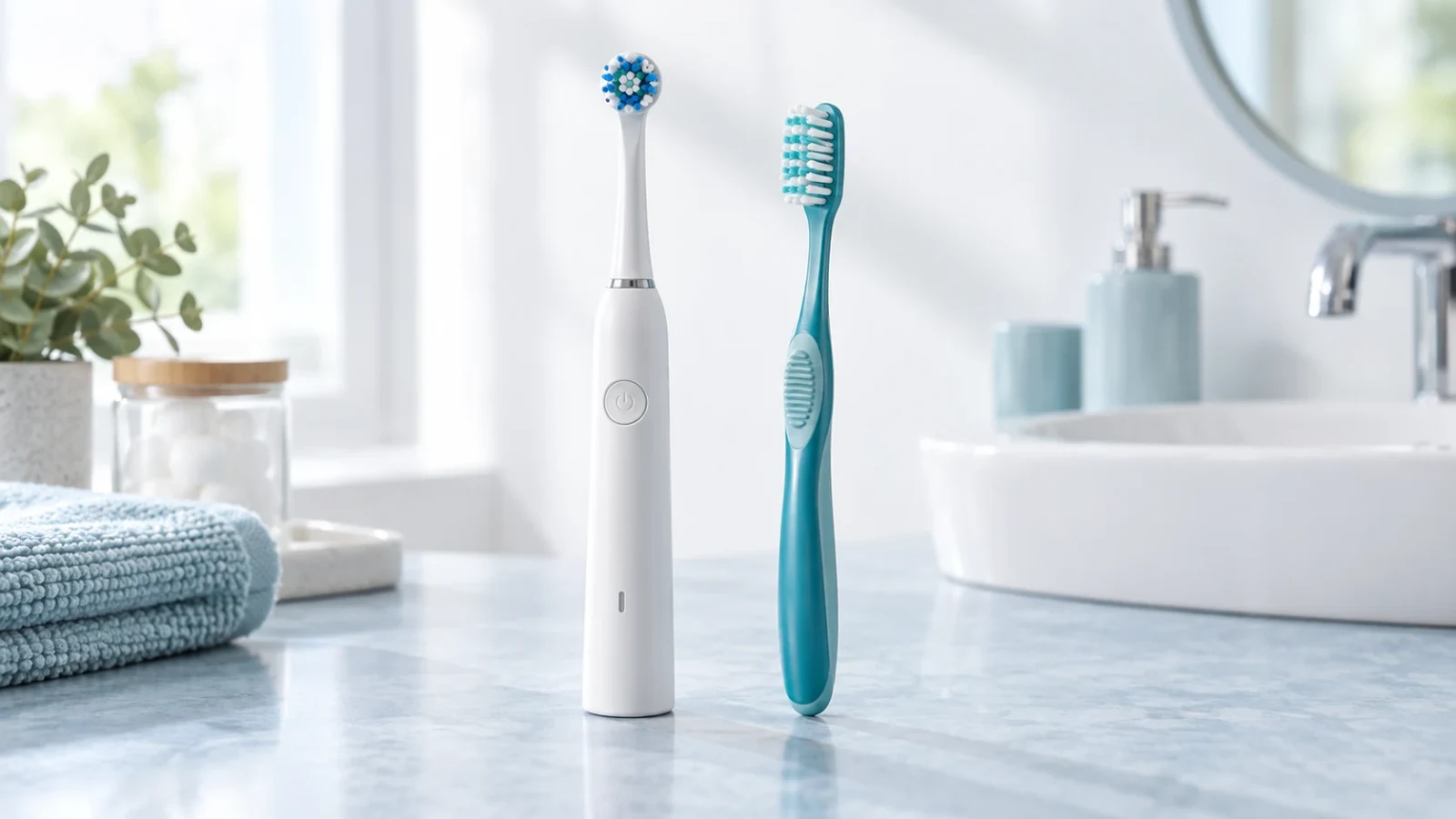
Electric or manual - which toothbrush actually cleans better? It’s one of the most common questions patients ask, and the answer is more nuanced than the marketing suggests. Both can keep your teeth healthy; what matters most is how you use them. Here’s an honest comparison to help you choose.
Whichever brush you choose, technique is everything. Our step-by-step brushing and flossing guide shows how to get it right.
The Honest Answer
A manual toothbrush used with good technique for two minutes, twice a day, cleans teeth perfectly well. That said, research suggests electric brushes - particularly oscillating-rotating types - can remove a little more plaque for many people, mainly because they make good technique and timing easier. The best brush is the one you’ll use properly and consistently.
Advantages of Electric Brushes
- Do much of the movement for you, helping consistent cleaning
- Built-in timers encourage the full two minutes
- Often easier for people with limited dexterity - arthritis, for example
- Some pressure sensors warn when you’re brushing too hard
- Many people find them easier to use well, especially around the gumline
- Can be more engaging - helpful for children and teens
Advantages of Manual Brushes
- Inexpensive and available everywhere
- No charging or batteries - handy for travel
- Fully effective when used with good technique
- Easy to replace regularly
- Complete control over pressure and movement
Key fact: No toothbrush cleans between the teeth - electric or manual. Those surfaces, where much decay and gum disease begin, need daily flossing or interdental brushes. Choosing between electric and manual matters far less than whether you clean between your teeth every day.
Whichever You Choose
- Use a soft-bristled head
- Brush twice a day for two minutes with fluoride toothpaste
- Angle the bristles at the gumline and be gentle
- Spit, don’t rinse, after brushing
- Replace the brush or head every three months
- Floss or use interdental brushes daily
Electric vs Manual at a Glance
| Factor | Electric | Manual |
|---|---|---|
| Plaque removal | Slightly more for many | Effective with good technique |
| Built-in timer | Usually | No |
| Ease of use | Often easier | Needs good technique |
| Good for limited dexterity | Yes | Less so |
| Cost | Higher | Low |
| Travel | Needs charging | Very convenient |
⚠ Important: An electric brush is not a licence to press harder - let it rest against the teeth and glide, don’t scrub. Bearing down with a powered brush can wear enamel and gums just as a hard manual scrub does. Gentle is best with either.
Not sure you’re brushing effectively?
At a check-up and clean at The Dentart, Sarjapura, Bengaluru, we’ll show you where you’re missing and which brush and technique suit you best. Book your visit today.
Frequently Asked Questions
Toothbrush questions our patients in Sarjapura ask most.
Is an electric toothbrush really better?
It can remove a little more plaque for many people and makes good technique easier, but a manual brush used well is also effective. Consistency matters most.
Which is better for my gums?
Either, used gently with a soft head. Some electric brushes have pressure sensors that help you avoid brushing too hard.
Are electric brushes worth the cost?
For people who struggle with technique or timing, or have limited dexterity, often yes. Otherwise a manual brush used well is fine.
Do I still need to floss with an electric brush?
Yes - no brush cleans between the teeth. Daily flossing or interdental brushes are essential either way.
How often should I replace the head?
Every three months, or sooner if the bristles splay. A worn head or brush cleans poorly.
Final Takeaway
Electric versus manual is the wrong battle - both clean well when used properly. Electric brushes make good technique and timing easier and suit some people better, but a manual brush in a careful hand is just as effective. What truly decides your dental health is brushing gently for two minutes twice a day, and flossing daily.
Book a check-up and clean at The Dentart, Sarjapura, and we’ll help you get the most from whichever brush you prefer.
You May Also Find Helpful
Book a Consultation
It’s easy and free!