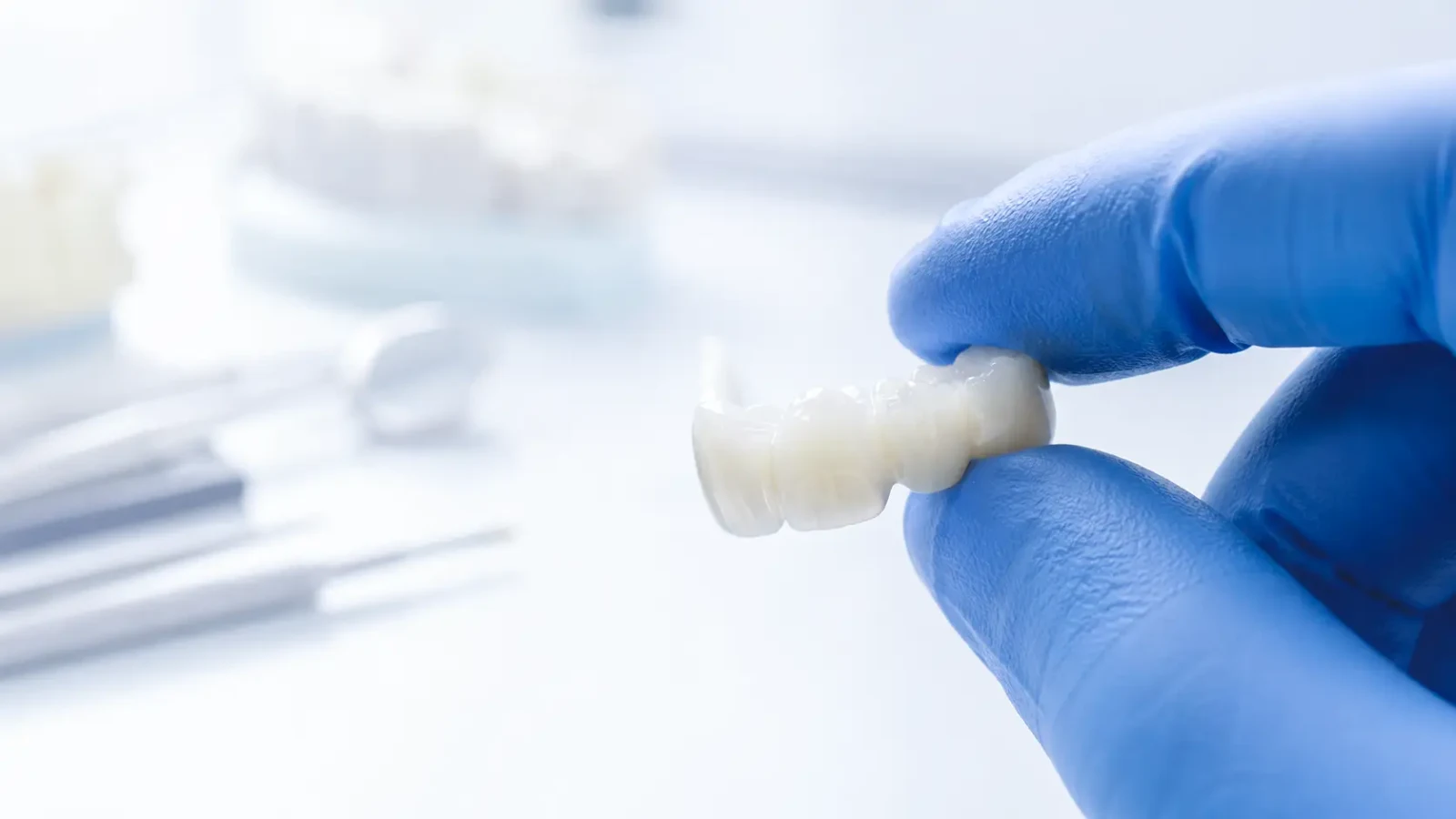
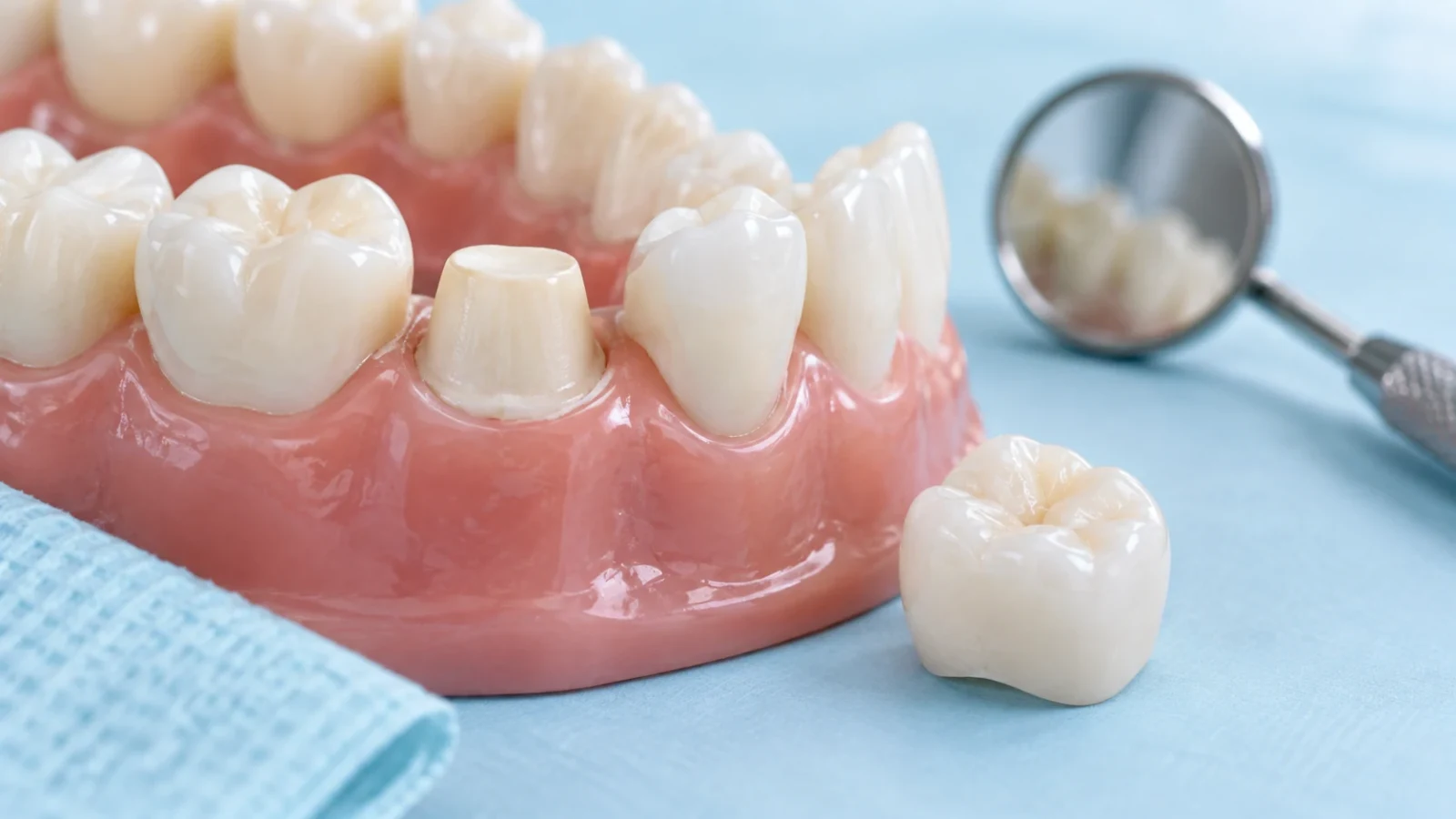
A dental crown is a custom cap that covers a damaged or weakened tooth, restoring its strength, shape, and appearance. Crowns are one of the most common restorations in dentistry, used after root canals, on cracked teeth, and to anchor bridges. Here’s a full guide to the types, the procedure, and how to make a crown last.
If you’re unsure whether you need a crown or a filling, our crowns vs fillings guide explains which suits which situation.
When You Need a Crown
- To protect a tooth after root canal treatment, especially a back tooth
- To restore a cracked, broken, or heavily worn tooth
- When a large filling keeps failing or too little tooth remains
- To rebuild a badly decayed tooth
- To anchor a dental bridge
- To cover a dental implant
- Sometimes for cosmetic reshaping
Types of Crown
- Porcelain / ceramic - the most natural-looking; ideal for front teeth
- Zirconia - very strong and natural-looking; excellent for back teeth
- Porcelain-fused-to-metal - a strong, tooth-coloured all-rounder
- Metal (including gold alloys) - extremely durable and gentle on opposing teeth, though not tooth-coloured
- The best choice balances strength, appearance, and the tooth’s position
The Procedure, Step by Step
- Assessment - the tooth is examined and the right material chosen
- Preparation - the tooth is shaped under local anaesthetic to make room for the crown
- Impression - a mould or digital scan is taken; a temporary crown is fitted
- Fabrication - the crown is made, usually in a dental lab
- Fitting - the final crown is checked, adjusted, and cemented in place
- Some clinics offer same-day crowns milled on site
Key fact: A crown protects the tooth it covers, but the tooth underneath can still decay at the margin where the crown meets the gum. Cleaning that gumline thoroughly every day - brushing and flossing around it - is what allows a crown to last well over a decade.
Crown Materials at a Glance
| Material | Best For | Note |
|---|---|---|
| Porcelain / ceramic | Front teeth | Most natural look |
| Zirconia | Back teeth | Strong and natural |
| Porcelain-fused-metal | Most teeth | Strong all-rounder |
| Metal / gold | Back teeth | Very durable, not tooth-coloured |
⚠ Important: A crowned tooth can still crack or become infected underneath if neglected - and because it’s capped, a problem may be advanced before you notice. Keep up cleaning and regular check-ups so any issue at the margin is caught early.
Need a crown, or wondering if you do?
Book a consultation at The Dentart, Sarjapura, Bengaluru. We’ll assess the tooth, recommend the right material, and restore its strength and appearance to last.
Frequently Asked Questions
Crown questions our patients in Sarjapura ask most.
How long do dental crowns last?
Commonly 10–15 years or more with good care. Cleaning the gumline well and regular check-ups are what make the difference.
Is getting a crown painful?
Preparation is done under local anaesthetic, so it’s comfortable. Some mild sensitivity for a few days afterwards is normal.
Which crown material is best?
It depends on the tooth. Porcelain and zirconia look most natural; metal is toughest. We’ll match the material to the tooth’s position and role.
Can a crowned tooth get a cavity?
Yes - at the margin where crown meets gum. That’s why brushing and flossing around it and regular check-ups matter.
What’s the difference between a crown and a veneer?
A crown covers the whole tooth to restore strength; a veneer covers just the front for appearance. Crowns suit damaged teeth, veneers cosmetic changes.
Final Takeaway
A crown rescues and protects a tooth that’s too damaged for a filling, restoring its strength and looks for many years. The material is matched to the tooth’s job, and the key to longevity is simple - clean the gumline well and keep up your check-ups so the tooth beneath stays healthy.
Book a consultation at The Dentart, Sarjapura, and we’ll restore your tooth the right way.
You May Also Find Helpful
Book a Consultation
It’s easy and free!