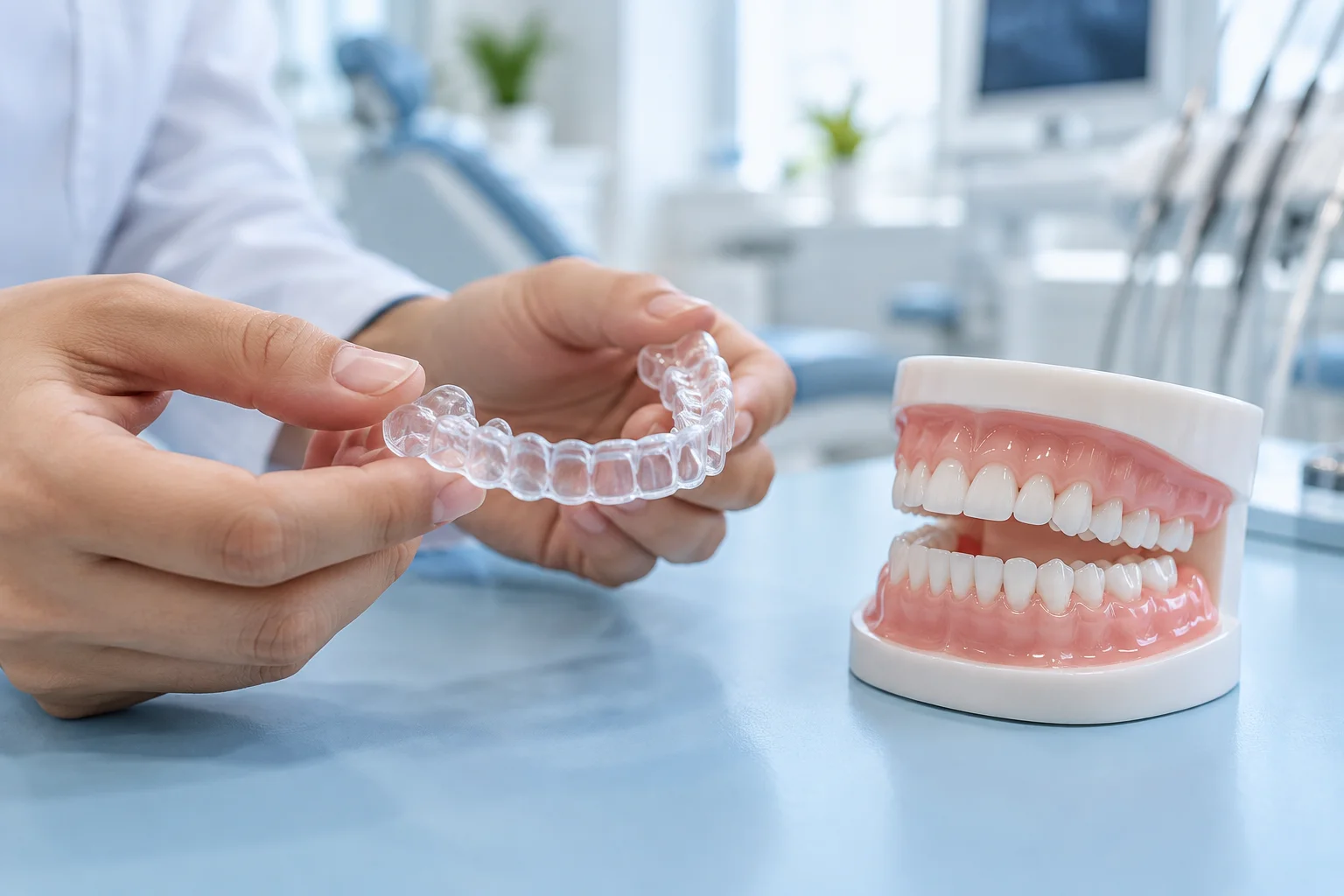
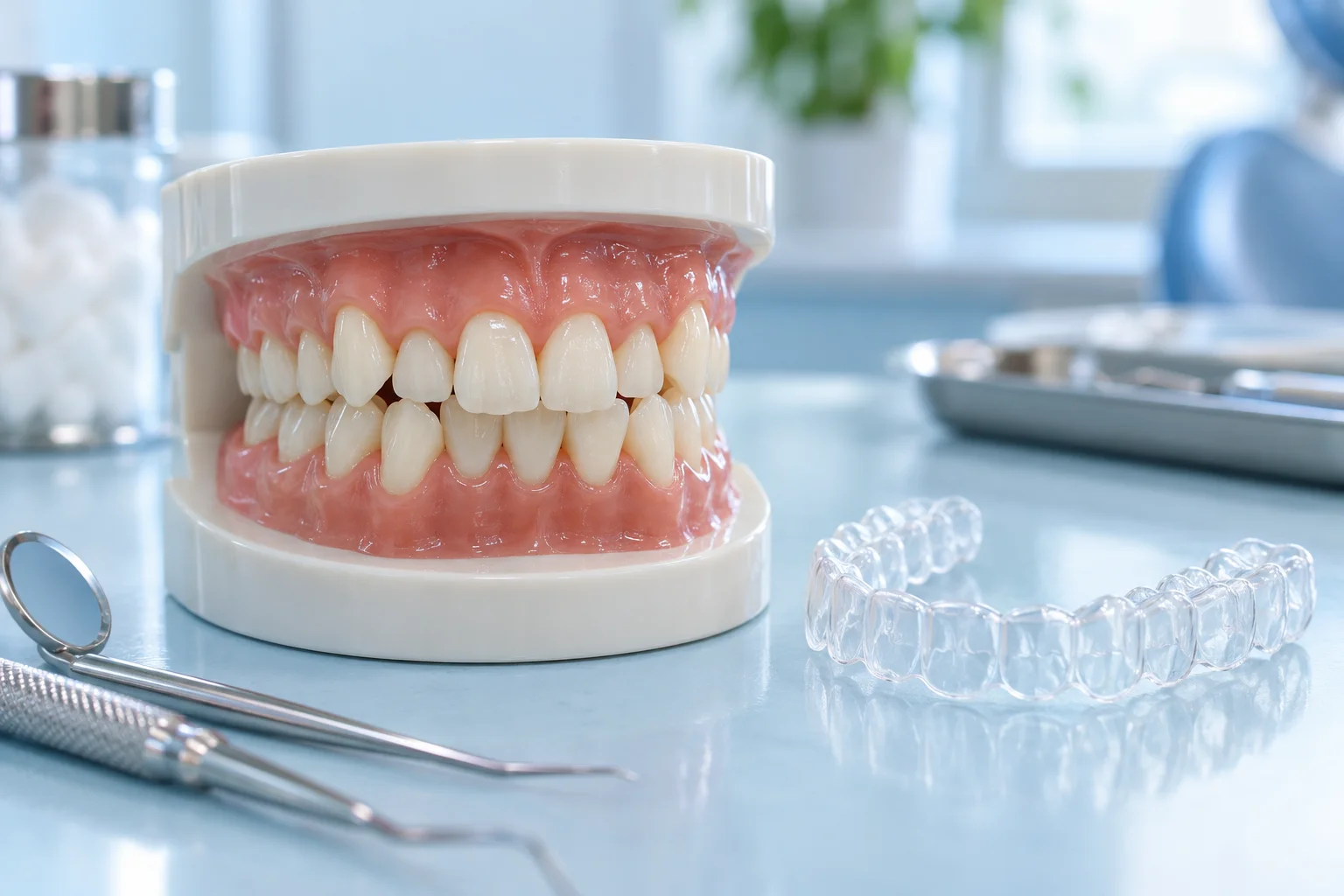
Overlapping front teeth can make clear aligners seem an obvious choice. But the appearance of crowding does not reveal how much space is needed, which movements would be involved or how the upper and lower teeth should meet afterwards. Those questions need an orthodontic assessment before choosing an appliance.
Clear aligners can be an option for some crowded teeth. They are not suitable for every case, and more complex treatment may need additional techniques or a different approach. This guide explains what to ask about the space and treatment plan, rather than judge suitability from a photograph.
What Does “Crowded Teeth” Mean?
Teeth may overlap, rotate or sit outside the line you expect when there is insufficient room for their alignment. The amount and arrangement of crowding vary. A small-looking irregularity may involve a different problem from a more obvious overlap.
Tell the clinician what concerns you: appearance, food trapping, difficulty cleaning or a change after previous treatment. These priorities help the discussion, but they do not replace an examination of the teeth, supporting tissues and bite.
When Might Aligners Be Considered?
The British Orthodontic Society describes mild to moderate irregularity and certain crowding problems among the situations where aligners may be used. It also notes that severe crowding, extraction cases and complex movements may require additional techniques, including fixed appliances.
Ask where your case fits and why a particular approach is being recommended. A promise based only on how the front teeth look misses the planning needed for the rest of the mouth. Our aligners versus braces guide gives a broader comparison of appliances.
Ask How Space Would Be Created
The orthodontist should explain how the proposed movements address the lack of space. Depending on the case, the discussion may include changes to the dental arch, small planned reductions between teeth or extractions. Not every approach is suitable for every patient.
If interproximal reduction is proposed, ask what it involves, which teeth are affected and why it is being considered. If extraction is discussed, ask about the reasoning and alternatives. These are planning decisions for a clinician, not steps to reproduce at home.
| Part of the assessment | Question to ask |
|---|---|
| Amount and position of crowding | Which teeth need movement, and how much space is required? |
| Space planning | How would the necessary space be created, and what are the limitations? |
| The bite | How will the upper and lower teeth meet after the proposed changes? |
| Supporting dental health | Does any other dental or gum care need attention first? |
| Appliance choice | Why are aligners, braces or a combination being recommended? |
Why the Bite Matters Alongside Appearance
A proposal should explain more than whether front teeth can be made to look straighter. Ask how the planned movement relates to the way your teeth meet, and whether all the concerns you raised are included in the treatment goals.
If the plan is deliberately limited, understand what will remain unchanged. Our bite-problems guide introduces useful terminology, but your clinician should explain what the examination means in your own case.
Will Attachments or Other Steps Be Needed?
Some aligner plans use tooth-coloured attachments or other additional techniques. Ask which components are proposed, how they are used and what you would need to do between reviews. Clear trays should not be assumed to mean there will be no other visible elements.
Ask how progress will be assessed and what would happen if a planned movement is not achieved as expected. The answer should include how the clinician decides the next step, not simply a promise that the initial series of trays will solve every concern.
Think About Wear and Cleaning Before Agreeing
Ask for the wear instructions specific to your plan and discuss any routine that might make them difficult to follow. The FDA notes that treatment may not progress as intended when aligners are not worn as directed. Be realistic about meals, work and travel when discussing the responsibilities.
Ask how to clean crowded areas while treatment is underway and whether any tools need demonstrating. Our aligner care guide covers everyday handling, while brushing and flossing advice can support the cleaning discussion.
What If You Have Already Had Braces?
Bring previous treatment records and your retainer, if available. Explain when you first noticed movement and whether the appliance still fits. Do not assume that a short course of trays is appropriate just because treatment was completed previously.
The orthodontist can assess the current concern and explain the suitable options. Read our retainer guide for the wider after-treatment context, and ask before trying to force an old appliance into place.
Discuss Crowded Teeth in Sarjapura
At The Dentart, you can request an assessment with Dr Neethu John, BDS, MDS (Orthodontics). Explore the braces and aligner service and use the consultation checklist to prepare your questions.
Our Tindlu, Sarjapura location page has directions and clinic hours. Explain whether your concern is a new assessment, changes after previous treatment or a problem with an appliance you currently wear.
Frequently Asked Questions
Can aligners treat every case of crowding?
No. Suitability depends on the assessment and planned movements. More complex cases may need other techniques or a different appliance.
Does crowding always mean teeth need extracting?
No single approach applies to everyone. Ask how space would be created in your case and why the proposed method is appropriate.
Can a photograph tell me whether aligners will work?
A photograph can show a concern, but it does not replace the examination and records needed for a treatment plan.
Will I need retainers after alignment?
Discuss retention before starting treatment. Ask which appliances, instructions and reviews are proposed for your plan.
Further Reading
Book a Consultation
It’s easy and free!