
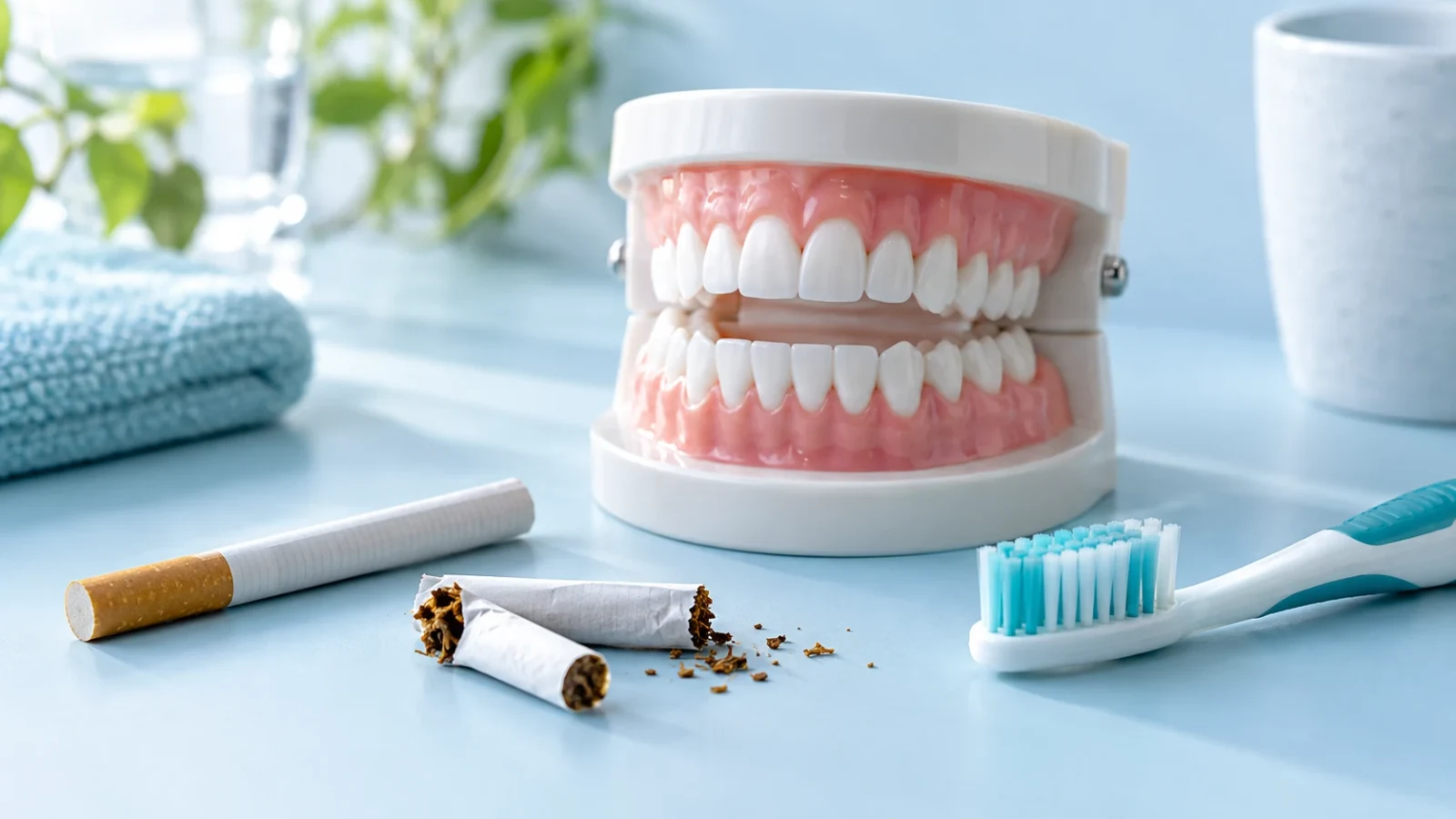
Smoking and tobacco use affect your mouth long before they affect the rest of your body - staining teeth, driving gum disease, and raising the risk of tooth loss and oral cancer. Tobacco in all its forms, including chewed varieties common in India, does real damage. Here’s the full picture - and the encouraging news about quitting.
Tobacco is also the leading risk factor for oral cancer. Our companion guide on oral cancer signs and screening covers what to watch for.
How Tobacco Harms Your Mouth
- Gum disease - tobacco is one of the biggest risk factors, and it progresses faster in smokers
- Tooth loss - as the supporting bone is destroyed
- Staining - stubborn yellow-brown discolouration
- Bad breath that lingers
- Reduced healing - slower recovery after extractions and poorer implant success
- Oral cancer - a substantially increased risk, especially with chewed tobacco and areca nut
- Reduced taste and smell
Why Smoking Hides Gum Disease
This is one of the most dangerous effects. Smoking reduces blood flow to the gums, so they often don’t bleed even when disease is advanced. Bleeding is the usual early warning sign - and without it, gum disease can progress silently and painlessly until teeth become loose. Smokers can have severe gum problems while their gums look deceptively ‘healthy’.
Key fact: Chewed tobacco and areca nut products - gutkha, paan, khaini, and similar - are especially harmful, strongly linked to gum disease, tooth loss, pre-cancerous changes, and oral cancer. There is no safe form of tobacco, smoked or smokeless.
The Good News About Quitting
- Blood flow to the gums improves within weeks, so gum health starts to recover
- The risk of gum disease and tooth loss falls over time
- The oral cancer risk drops steadily the longer you stay stopped
- Healing improves, making treatment and implants more successful
- Breath and taste improve
- It’s never too late - benefits begin at any age you quit
Tobacco’s Effects at a Glance
| Effect | After Quitting |
|---|---|
| Gum disease risk | Falls over time |
| Hidden gum bleeding | Warning signs return, aiding diagnosis |
| Staining & bad breath | Improve |
| Healing / implant success | Improves |
| Oral cancer risk | Drops steadily |
⚠ Important: Because smoking masks gum bleeding, smokers and tobacco users should have more frequent dental check-ups - problems that would normally announce themselves stay hidden. Regular professional assessment is the way to catch them early.
Thinking about quitting?
Whatever stage you’re at, we’re here to help, not judge. Book a check-up at The Dentart, Sarjapura, Bengaluru - we’ll assess your gums, screen your mouth, and support you if you’d like to stop.
Frequently Asked Questions
Tobacco and oral health questions our patients in Sarjapura ask most.
How does smoking affect my gums?
It’s a major cause of gum disease and speeds it up - while masking the bleeding that would normally warn you, so it often progresses unnoticed.
Is chewing tobacco safer than smoking?
No. Chewed tobacco and areca nut products (gutkha, paan, khaini) are strongly linked to gum disease, tooth loss, and oral cancer.
Will my gums recover if I quit?
Yes - blood flow and gum health begin to improve within weeks, and long-term risks fall the longer you stay stopped.
Does smoking affect dental implants?
Yes - it slows healing and significantly lowers implant success rates. Quitting improves the odds considerably.
Can you help me stop?
We’re glad to support you and can point you toward cessation resources. Any step to cut down or quit helps your mouth and your health.
Final Takeaway
Tobacco harms the mouth in every form - staining, gum disease, tooth loss, and a serious rise in oral cancer risk - and it hides the very warning signs that would otherwise prompt treatment. The best news is that quitting brings real, measurable recovery at any age. If you use tobacco, regular check-ups and support to stop are the two most valuable things you can do.
Book a check-up at The Dentart, Sarjapura - for a thorough assessment and support to quit if you want it.
You May Also Find Helpful
Book a Consultation
It’s easy and free!