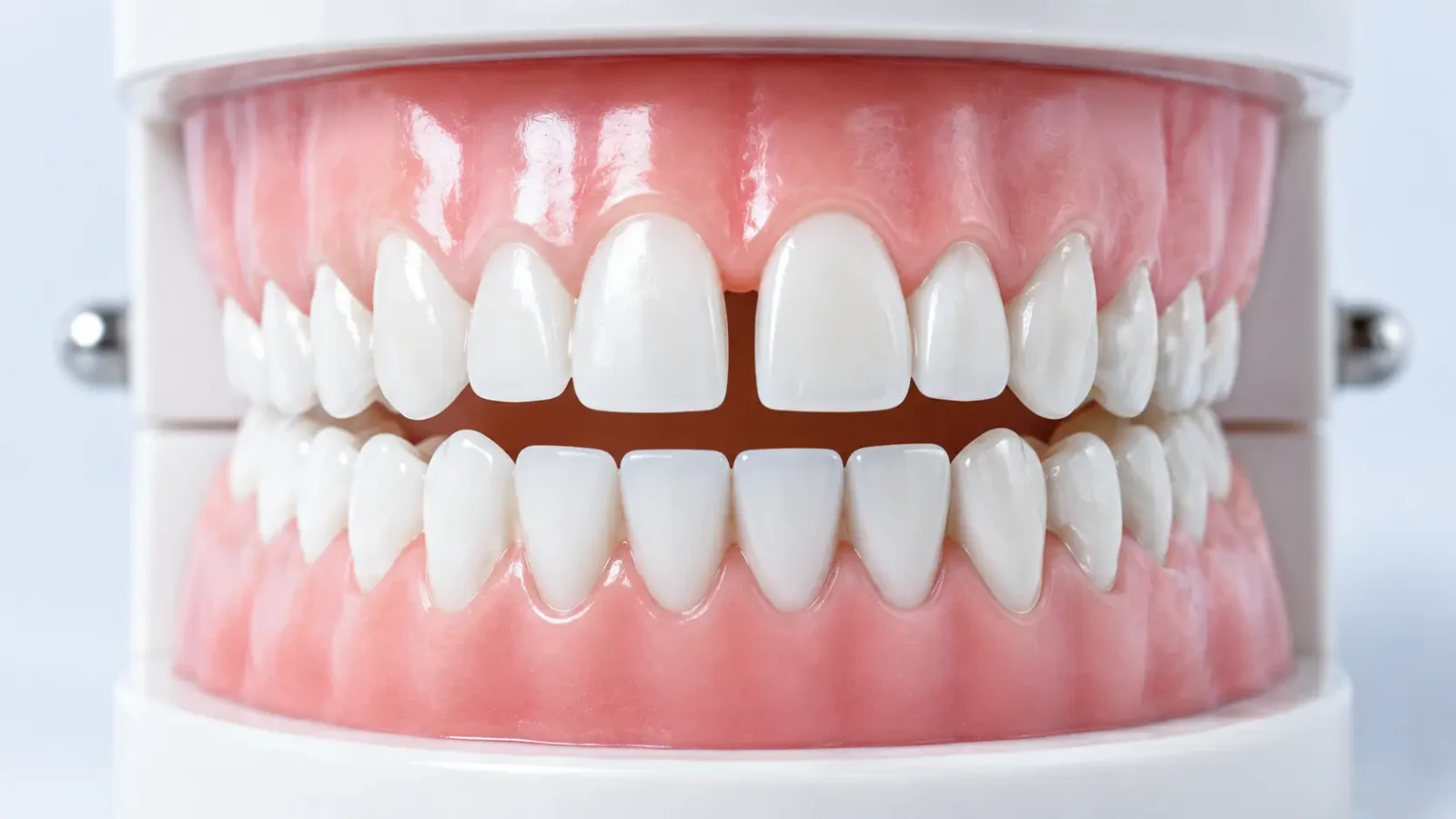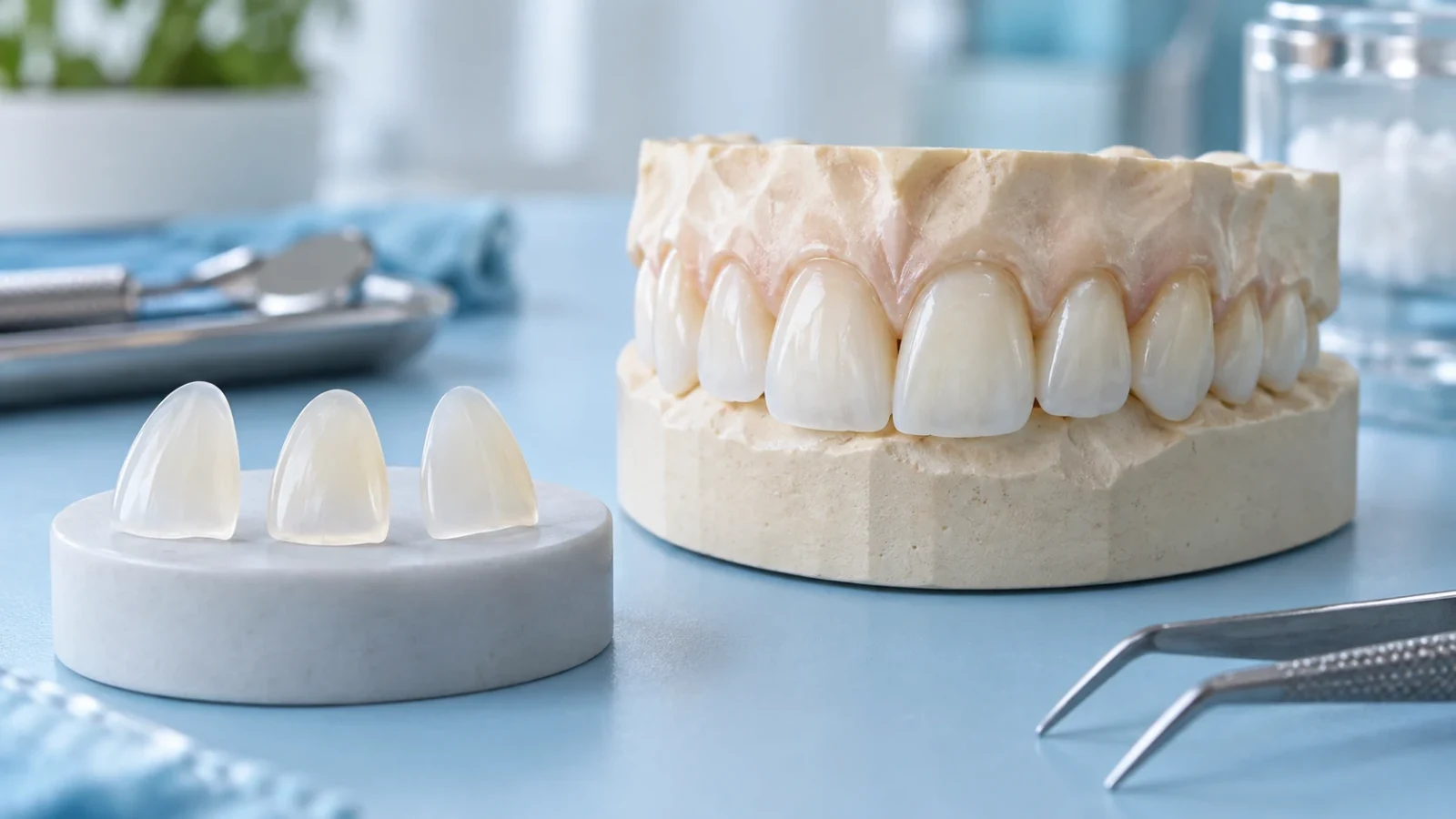

Composite bonding is one of the quickest, most affordable ways to improve a smile. Using tooth-coloured resin, a dentist can repair chips, close small gaps, reshape teeth, and mask stains - often in a single visit, usually without removing any healthy tooth. Here’s what it can do and how it compares with veneers.
Bonding is often the simplest option in a cosmetic plan. To see how it sits alongside veneers and whitening, read our smile makeover guide.
What Bonding Can Fix
- Chipped or cracked edges on front teeth
- Small gaps between teeth
- Teeth that are slightly short, worn, or uneven
- Stains and discolouration that whitening can’t shift
- Exposed roots from mild gum recession
- Reshaping a tooth to match its neighbours
How the Procedure Works
- Shade matching - resin is chosen to match your natural teeth
- Preparation - the surface is lightly roughened and conditioned; usually no drilling
- Application - the putty-like resin is shaped directly onto the tooth
- Setting - a curing light hardens it in seconds
- Polishing - it’s smoothed and polished to look natural
Bonding vs Veneers
Bonding is faster, cheaper, and more conservative - usually done in one visit with little or no enamel removed, and it can be repaired easily. Veneers cost more and involve preparing the teeth, but they last longer, resist staining better, and give the most polished result for a full smile transformation. Bonding suits small, targeted fixes; veneers suit comprehensive makeovers.
Key fact: Because composite bonding removes little or no enamel, it’s often reversible - a rare quality in cosmetic dentistry. That makes it a low-risk way to try improving a tooth’s shape or close a small gap without a permanent commitment.
Bonding vs Veneers at a Glance
| Factor | Bonding | Veneers |
|---|---|---|
| Visits | Usually one | Usually two |
| Tooth preparation | Minimal / none | Some enamel shaped |
| Lifespan | 4–8 years | 10–15+ years |
| Stain resistance | Moderate | High |
| Reversible | Often | No |
| Cost | Lower | Higher |
⚠ Important: Composite resin can stain over time and chip if you bite hard objects, pens, or nails. Bonded teeth need the same care as natural ones - and avoiding staining habits like heavy coffee, tea, and tobacco keeps them looking their best for longer.
Small chip or gap bothering you?
Book a cosmetic consultation at The Dentart, Sarjapura, Bengaluru. We’ll show you whether quick, conservative bonding is all you need - often sorted in a single visit.
Frequently Asked Questions
Bonding questions our patients in Sarjapura ask most.
How long does composite bonding last?
Typically four to eight years, depending on the teeth involved and your habits. It can be polished or repaired to extend its life.
Does bonding damage my teeth?
No - it usually needs little or no enamel removal, which is why it’s often reversible.
Will the bonding match my teeth?
Yes - the resin is shade-matched to blend with your natural teeth so it’s hard to spot.
Can bonding stain?
It can over time, especially with coffee, tea, and tobacco. Good habits and regular polishing keep it looking fresh.
Is bonding better than veneers?
For small, targeted fixes, bonding is ideal. For a full, long-lasting smile transformation, veneers usually win.
Final Takeaway
Composite bonding is the go-to for quick, affordable, conservative cosmetic fixes - chips, small gaps, and reshaping - often in a single appointment and often reversible. For bigger transformations or maximum longevity, veneers may suit better, but for many small concerns bonding is all that’s needed.
Book a cosmetic consultation at The Dentart, Sarjapura, and see how a simple fix could improve your smile.
You May Also Find Helpful
Book a Consultation
It’s easy and free!